

Applications open for HIP LOY & FSC 2027
Applications are now open for 2027 – get involved in HIP Learner of the Year & HIP Female Skills Competition today!

Russia’s military aggression in Ukraine has convinced western economies to suspend Russian energy imports. A solution to replenishing European and global power capacity is to swiftly introduce substitute energies into domestic energy mixes.
Hydrogen has been identified as possessing capabilities that can both reduce Russian fuel imports whilst cutting carbon emissions. Hydrogen is already accepted as a future world fuel source by major companies and prominent economies across the globe making a future international hydrogen economy likely. As a future global energy strategy that shifts away from fossil fuels has been hastened by the Ukraine crises hydrogen advancement is expected.
Energy market analysts and journalists recently described China’s current domestic hydrogen push as providing stimulus towards a functioning global hydrogen economy due to the sheer size of China’s domestic market.
It is believed that once China openly endorses hydrogen usage across multiple sectors and industries, international hydrogen production costs will fall and manufacturing output rise. China’s domestic hydrogen usage can supply fertile conditions for an international hydrogen economy to gain traction.
The same logic is to be applied to American acceptance of hydrogen. America is the world’s number one economy and military power. Social, economic and cultural trends adopted in America often drift across the Atlantic and into the current of UK life also.
American hydrogen projects are wide in number and cover a range of specific areas, such as injecting hydrogen blends into regional gas transmission networks, transport sector fuel replacement and constructing hydrogen hubs.
In July 2021 the US Department of Energy (DOE) sanctioned $52.5 million in funding towards 31 projects that focused on increasing hydrogen’s domestic capabilities as a multi-use energy resource. Projects included: clean hydrogen production, domestic supply chain cost reduction, advancing alternative cost-effective production methods and developing gas turbine combustion systems for domestic purpose. These combustion systems will be able to accept 100% hydrogen as well as natural gas blends.
The Biden administration is going to increase financial outlay from $44.9 billion in 2022 to $48.2 billion in 2023. Advancing carbon capture technology, renewable production, electric vehicles, and hydrogen technologies will be areas prioritized by this funding.
An area of study undertaken by multiple regional American energy distributers is domestic hydrogen usage. Entergy, a southern state energy provider has admitted plans to local administrators to construct a hydrogen dispersal facility to provide power to local homes.
The plant will be in Bridge City, Texas, next to existing hydrogen infrastructure that Entergy already own and operate. Initial hydrogen and natural gas mixes will be around 30% with a 100% green hydrogen conversion being the aim. If approved, this project will begin construction in 2023.
A separate east coast venture concentrating on hydrogen and natural gas mixes has also been undertaken. New Jersey Resources Corp (NJR) has been delivering small amounts of green hydrogen into local homes and businesses within their operational authority, Howell, New Jersey. The exact percentage of hydrogen blending has not been revealed. The project is actively on-going.
Applications are now open for 2027 – get involved in HIP Learner of the Year & HIP Female Skills Competition today!
Giving and Taking Feedback Like a Pro: Learn how to give constructive feedback, take advice on board and build the skills to succeed in your career!
Get Involved. See What You Can Achieve: Discover how entering HIP competitions can boost your confidence, challenge yourself and help you realise your potential!

Carhartt women’s steel pants have been designed around how women actually move and work on site rather than simply resizing men’s.
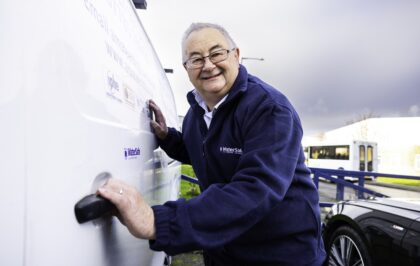
Registered Plumbers: 91% of UK homeowners believe installers should be qualified, vetted and on an official register.

We are delighted to announce the winner of the HIP Female Skills 2026 – congratulations to Bronwen Evans from Cardiff and Vale College!