

Applications open for HIP LOY & FSC 2027
Applications are now open for 2027 – get involved in HIP Learner of the Year & HIP Female Skills Competition today!

The cooler temperatures and icy conditions that often appear during a typical UK winter don’t just cause havoc with the roads, but can bring plenty of customer queries as to why their shower is no longer reaching the temperatures it did in the warmer summer months.
So how do installers approach and resolve this?
Combi boilers that supply mixer or digital showers often present the greatest amount of enquiries from customers, as it’s expected that this amazing invention should be able to deliver instant hot water at the same temperature and flow rate, no matter the season or what the conditions outside are like.
Due to the effect of the seasons, however, this isn’t the case, as the average 35°C temperature increase, which many combination boilers are specified to on the domestic hot water (DHW) side, simply can’t heat the cold supply, especially when the cold mains supply can be as low as 5°C during the winter.
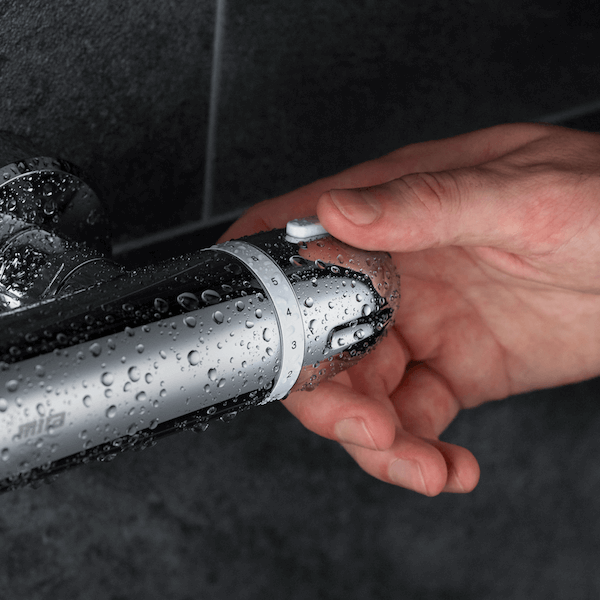
Most mixer and digital showers need a hot water supply of 55-65°C and, with the 35°C temperature rise that is typical of most combination boilers, the best a customer can hope for in that circumstance is a DHW supply of circa 40°C.
Most combi boilers range from 24-32kW and the 35°C temperature increase is often specified at a given flow rate of 10-12l/min. As modern mixer and digital showers are created to be as free-flowing as possible, it’s not unusual for shower flow rates to surpass this. Especially on a generous main supply where this can be exacerbated, with water passing through the plate to the plate heat exchanger at such a rate, that the possibility of the DHW reaching the specified 35°C temperature rise is drastically reduced.
However, it must be acknowledged that there are many variables at play here regarding the kW rating of the boiler in question, and the DHW temperature rise they’re capable of at their specified flow rate.
To combat the temperature issue, this can be rectified with flow regulators which are supplied with most mixer and digital showers. Flow regulators have been manufactured to regulate the flow rate through the shower and should either be installed on the incoming hot supply to the mixing valve, or on the outlet of some mixer showers.
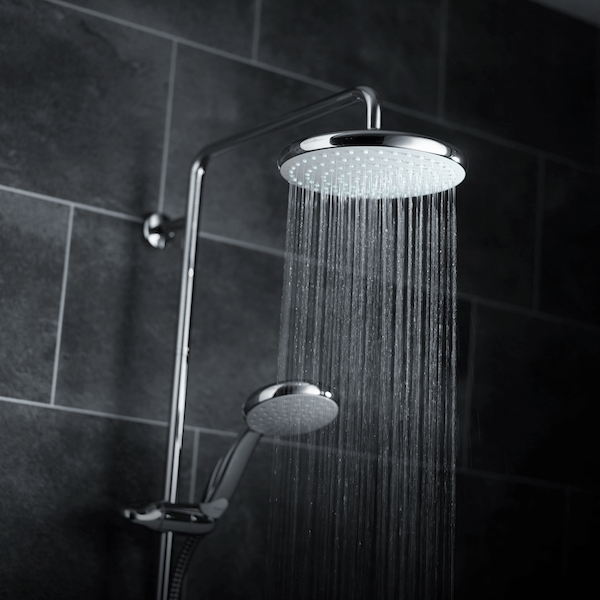
It’s often thought that these devices affect the showering experience, but when taking into account how customers increase the temperature of the domestic hot water when they’re running a bath or washing up (and the answer is always: ‘to reduce the flow from the tap’), the exact same principle is applied when installing flow regulators.
The issue with this, however, is that this is exactly how combi boilers and, in fact, any instantaneous hot water appliances, work, so our customer service team at Mira will often supply flow regulators free of charge for customer and installers enquiring about these issues at this time of year. We also recommend the installation of flow regulators from the offset, where it’s specified in the instructions for specific showers.
If a flow regulator hasn’t been fitted from the beginning, we can send outlet flow regulators which can be installed by the customer, and these will need to be positioned in between the valve body and the shower hose. When the appropriate size flow regulator is installed (either 6/8/10 litres per minute,) this often resolves the issue by slowing the water down enough for the combi boiler to heat it to a sufficiently high temperature.
Of course, it’s advisable that flow regulators are installed from the beginning, but upgrades in systems from gravity-fed to high-pressure combination boiler systems can mean that fitting them on the original installation of the shower just wasn’t applicable at the time.
It is important to remember that flow regulators are not suitable for installation to electric showers – the devices can cause these showers to overheat and reach unsafe temperatures.
With colder temperatures, we do often receive the same enquiries from customers with electric showers; here, a slight adjustment to the customer’s temperature dial can raise the shower temperature sufficiently.
It’s vital that customers are given a thorough handover of any shower and talked through its operation following its installation, to combat some of these queries. Not only can the customer be left to enjoy their shower, but it also leaves you, the installer, with more time to deal with the calls which grow your business, and not those which don’t.
If you need more information on how seasonal changes can affect shower temperatures throughout the year, watch our film below or speak to a member of our customer service team on 0800 001 4040.
Applications are now open for 2027 – get involved in HIP Learner of the Year & HIP Female Skills Competition today!

We are delighted to announce the winner of the HIP Female Skills 2026 – congratulations to Bronwen Evans from Cardiff and Vale College!

We are delighted to announce the winner of the HIP Learner of the Year Competition 2026 – congratulations to Daniel Roberts!

Giving and Taking Feedback Like a Pro: Learn how to give constructive feedback, take advice on board and build the skills to succeed in your career!

Get Involved. See What You Can Achieve: Discover how entering HIP competitions can boost your confidence, challenge yourself and help you realise your potential!

Carhartt women’s steel pants have been designed around how women actually move and work on site rather than simply resizing men’s.

Registered Plumbers: 91% of UK homeowners believe installers should be qualified, vetted and on an official register.