

Applications open for HIP LOY & FSC 2027
Applications are now open for 2027 – get involved in HIP Learner of the Year & HIP Female Skills Competition today!
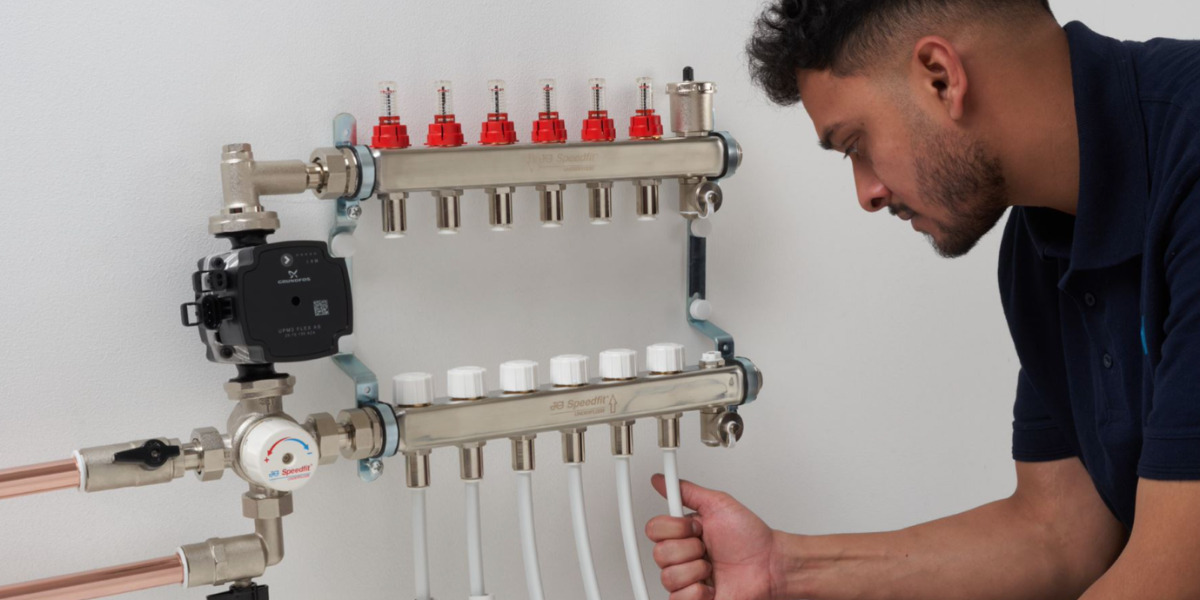
In 2022, not only did the UK government make significant changes to a number of existing building regulations, but they also introduced a new document focused on efficiency in new residential buildings. Many of these new changes have already started to affect the plumbing industry and are going to continue to do so in 2023. Here, Richard Bateman, Product Marketing Manager at RWC, takes another look at what these regulations are, and how they will affect the plumbing and heating industry in 2023.
For a little bit of history, in late 2021 the Department of Levelling Up Housing and Communities (DULHC) announced a number of changes to various building regulations and the introduction of new ones, which later came into effect in June of 2022. However, despite being a department for the UK government, these only affect England. Additionally, these regulations do not affect any buildings that were already part built, or approved to be built before June of 2022, as long as they are finished before June of 2023. Lately, further changes to part R were announced in October 2022, but these do not look like they will affect plumbing and heating at all.
Indeed, whilst many other changes were made, notably to part F (ventilation), the majority of the changes that affect plumbing and heating, fall under part L and G of the Building Regulations, which is what we will focus on in this feature.
So, what is new?
One of the biggest changes to part L is set to affect heating engineers, as it regards flow temperatures. Put simply, for heating systems, flow temperatures should no longer exceed 55°C and, in fact, they should be below this temperature if possible. This is likely a response to condensing boilers, which are inefficient if working with flow temperatures north of 55°C.
One of the problems this change causes, is the risk of Legionella bacteria forming in hot water that is unvented, and so it should be an additional consideration to bear in mind when installing a new boiler system.
Changes to Part L Building Regulations that affect Plumbing And Heating
In addition to this major change, there are a number of further changes affecting plumbing and heating.
Regulation 4.24, which refers to new build properties, states that all primary circulation pipes, including those in voids such as underfloor or in ducts between walls, will need to be insulated. In fact, the only area that is stated otherwise, is the one metre off every pipe from storage systems of hot water, whether this be boilers or unvented hot water cylinders, or where it terminates into a wall or floor.
Equally, regulation 4.25, which is regarding existing properties, states that if a boiler or cylinder is upgraded, any exposed pipe will require insulation.
The regulations also state that you must submit photographs of the insulated pipework to the building controls, to prove that they have in fact been insulated.
Regulation 5.10, which regards new systems in new or existing properties, states that all pipework and emitters, including underfloor heating (UFH), be sized appropriately to allow space heating systems to operate in a manner that meets the needs of the property, while staying at or below the aforementioned flow temperature of 55°C. While not an out and out rule, the most efficient way to achieve this in new builds is through the installation of UFH. It ensures that the property is heated most effectively, despite the drop in temperature setting. The regulations do however mention, that if, when installing a new boiler for example, the temperature cannot get below 55°C whilst heating the home efficiently, it should be set to the lowest temperature setting possible.

According to regulation 5.14, wet heating systems in new builds with a floor size of 150 square meters or more should have a minimum of two independently controlled heating circuits.
Regulation 5.15 states that, system controls should be wired so that when space heaters or hot water are not in use, the appliance and pump are turned off to not be in use either, while regulation 5.16 determines that domestic hot water circuits supplied from a hot water store, should have both of the following:
When it comes to primary hot water circuits for domestic hot water or heating, according to 5.17 the system should have a fully pumped circulation, when it is compatible with the heat generator.
Regulation 5.20 states that, when upgrading a boiler, you have to fit a thermostatic radiator valve on every radiator, unless they are installed into areas controlled by individual room thermostats. This used to just be a recommendation; however, it has now been changed to a regulation and must be carried out.
The final change to part L that affects plumbers is regulation 8.8, which determines that, before a new heating appliance is installed, all central heating and primary hot water circuits should be thoroughly cleaned and flushed out. This is to make domestic central heating systems comply to BS 7593. Therefore, all new boilers installed require a magnetic filter, the system water will need to be checked, cleaned if needed, and an inhibitor will need to be added to ensure that PH levels are kept correct, and the system does not cause corrosion.
Furthermore, not only do these systems need to be commissioned correctly, but there also needs to be evidence of this being the case.
What is Part O and what do you need to know?
Finally, the new Part O document details many changes that will affect installers too. This document affects houses, flats and apartments, student accommodation, HMOs, and care homes, including shared communal areas such as concierges, however it does not affect hotels. Similarly, the document does not apply to non-residential areas of mixed-use buildings, or residential areas formed by material change of use.

Firstly, if you begin work after June 2023 or the application was not received before June 2022, you must adhere to Part O. Secondly, there are two routes to compliance specified in Part O; the simplified method and the dynamic thermal modelling method (DTM). The simplified methods will be used more commonly in domestic properties, while the DTM method is applicable in commercial properties.
The simplified method details that the strategy for preventing overheating will be decided depending on the location of the building and whether it has cross ventilation or not, where cross ventilation is categorised as common spaces having openings on both facades. Therefore, single facades and corner flats do not have the capacity for cross ventilation.
How does Part O affect plumbers?
Part O states that the simplified model is not suitable for multi-unit buildings with significant horizontal pipework in a communal heating or hot water system.
Furthermore, the primary distribution of pipework should be through vertical risers to minimise heat gains to corridors. with vertical distribution the simplified method can be used.
Support when you need it
We appreciate that there are several changes and updates to regulations taking effect in 2023, but we hope this summary helps you get on top of your reading to ensure compliance. For full details on all regulations, please consult the government webpages on regulatory changes.
As a manufacturer, RWC and its Family of Brands, including JG Speedfit, JG Underfloor and Reliance Valves, want to ensure that your next project is hassle-free, regardless of regulatory changes. For further information about our products and their compliance for your next project, please visit or jgspeedfit.co.uk or reliancevalves.co.uk
Applications are now open for 2027 – get involved in HIP Learner of the Year & HIP Female Skills Competition today!

Giving and Taking Feedback Like a Pro: Learn how to give constructive feedback, take advice on board and build the skills to succeed in your career!

Get Involved. See What You Can Achieve: Discover how entering HIP competitions can boost your confidence, challenge yourself and help you realise your potential!

Carhartt women’s steel pants have been designed around how women actually move and work on site rather than simply resizing men’s.

Registered Plumbers: 91% of UK homeowners believe installers should be qualified, vetted and on an official register.

We are delighted to announce the winner of the HIP Female Skills 2026 – congratulations to Bronwen Evans from Cardiff and Vale College!