
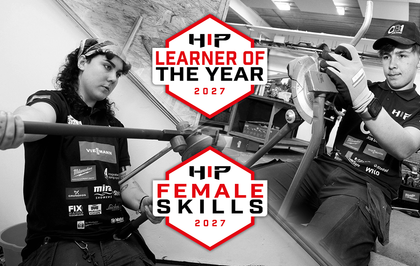
Applications open for HIP LOY & FSC 2027
Applications are now open for 2027 – get involved in HIP Learner of the Year & HIP Female Skills Competition today!

China’s market size underscores the potential for international investment and global energy options being dictated through its economies of scale
Recent developments in Ukraine have accelerated national energy security as a topic of governmental concern that is being felt across all continents. Locating and establishing alternative carbon free power resources has become even more important
China is currently the 2nd largest economy in the world behind the USA and dominant throughout the far-east. China also retains an international financial reach that extends throughout multiple sectors in various countries across the globe.
However, China is still deeply reliant on coal leading the world in both coal production and consumption. In order to attract a reputation as a world leading nation, China requires a transition towards a carbon free and sustainable source of domestic power.
As hydrogen is regarded as capable of delivering decarbonisation and power, China is currently investing large amounts of money in regional hydrogen projects. High levels of Chinese financial investments in hydrogen compliment ambitious national objectives.
China is already the world’s largest producer and consumer of hydrogen accounting for 20% of global demand. Once Chinese domestic hydrogen is fully operational throughout multiple sectors, international hydrogen costs will be reduced considerably and capacity size broadened due to the colossal size of the Chinese national market.
The China Hydrogen Alliance (CHA) predicts that by 2025, the Chinese national hydrogen industry output value will reach 1 trillion yuan ($152.6 billion). By 2030 China’s hydrogen demand will sit at 35 million tonnes, around 5% of national energy output.
Beijing plans to construct 37 new hydrogen stations by 2025 and create a hydrogen energy industrial chain in the Beijing – Tianjin – Hebei region at the cost of more than 100 billion yuan. 53 large scale projects and $17 billion of hydrogen investment have already been announced and can be considered at the mature stage of development. The Chinese government has also made $20 billion of public funding available with the view of enabling further hydrogen projects.
State owned oil and gas company Sinopec, has announced 30 billion yuan ($4.6 billion) is to be invested into near future hydrogen projects. Sinopec has already built 20 hydrogen filling stations with a further 60 under construction. Sinopec also aims to produce 1 million tonnes of naturally sourced green hydrogen between 2021 – 2025. Also by 2025, Sinopec will target an annual hydrogen refuelling capacity of 200,000 tonnes.
In a move that will positively validate Chinese decarbonisation ambitions, a major coal mining province will be adapted to function as a huge regional green hydrogen hub.
The region receives 3,100 hours of sunlight a year and feeds from high winds generated through a main channel of Siberian wind. Both of which contain high potential for transferable energy production.
A cluster of hydrogen plants and facilities will be installed in the cities of Ordos and Baotou from where hydrogen will be manufactured for national distribution. All facilities will combine to produce 66,900 tonnes of green hydrogen per year with capacity increasing to 500,000 tonnes per year by 2025. Operations will commence by mid – 2023.
Inner Mongolia also hopes to soon introduce a further 60 hydrogen retail stations, 3,800 hydrogen vehicles towards the mining logistics and public bus sector and 10,000 additional hydrogen powered vehicles on Inner Mongolia roads.
In a huge pilot demonstration project, China aims to convincingly introduce and validate a hydrogen economy to an entire city. The demonstration will take place in Rugao City – Jiangsu province. The pilot aims to achieve a range of objectives that establish and demonstrate a functioning hydrogen economy.
Specific focus within the pilot will also aim to demonstrate the feasibility of green hydrogen production; to present and improve hydrogen storage, hydrogen transportation and refilling outlets as well as to better understand domestic usage potential.
China is taking a gradual route of decarbonisation prioritizing the transport industry. Although there are no announcements on domestic hydrogen use, work on understanding home heating potential will begin in Rugao. Considering the volumes of green hydrogen that China aims to produce, it would be strange if hydrogen was not used as a source of domestic fuel. Green hydrogen will be cheaper and environmentally cleaner than coal.
Phasing out coal and transitioning to cleaner alternatives will benefit Chinese administrative costs: financial capital will be saved from the eventual exclusion of coal importation; and national funds will be accumulated through future mass-hydrogen exports.
China has identified hydrogen a national future and medium-term choice of power. The second largest economy on earth has begun initiating its hydrogen policies. These policies will result in international hydrogen costs to be lowered and international hydrogen capacity volumes elevated.
Chinese domestic market size can potentially propel hydrogen into the forefront of global energy solutions. UK end users should understand that international hydrogen usage is almost certainly going to spike in coming years. This will be made possible by sheer Chinese market size and their national requirement for a cheap and clean form of national fuel. Hydrogen is that fuel.
Applications are now open for 2027 – get involved in HIP Learner of the Year & HIP Female Skills Competition today!
Giving and Taking Feedback Like a Pro: Learn how to give constructive feedback, take advice on board and build the skills to succeed in your career!
Get Involved. See What You Can Achieve: Discover how entering HIP competitions can boost your confidence, challenge yourself and help you realise your potential!

Carhartt women’s steel pants have been designed around how women actually move and work on site rather than simply resizing men’s.
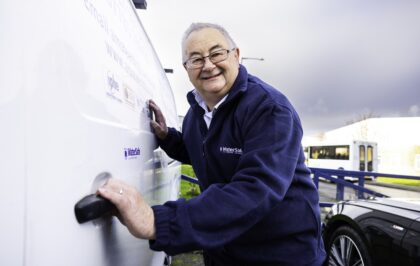
Registered Plumbers: 91% of UK homeowners believe installers should be qualified, vetted and on an official register.

We are delighted to announce the winner of the HIP Female Skills 2026 – congratulations to Bronwen Evans from Cardiff and Vale College!