
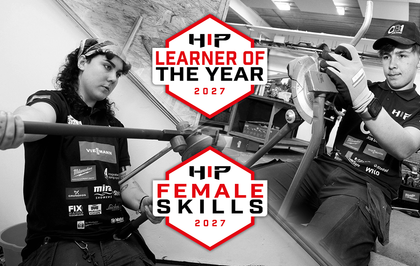
Applications open for HIP LOY & FSC 2027
Applications are now open for 2027 – get involved in HIP Learner of the Year & HIP Female Skills Competition today!
This CPD – and all others – can be found over on the Rinnai website.
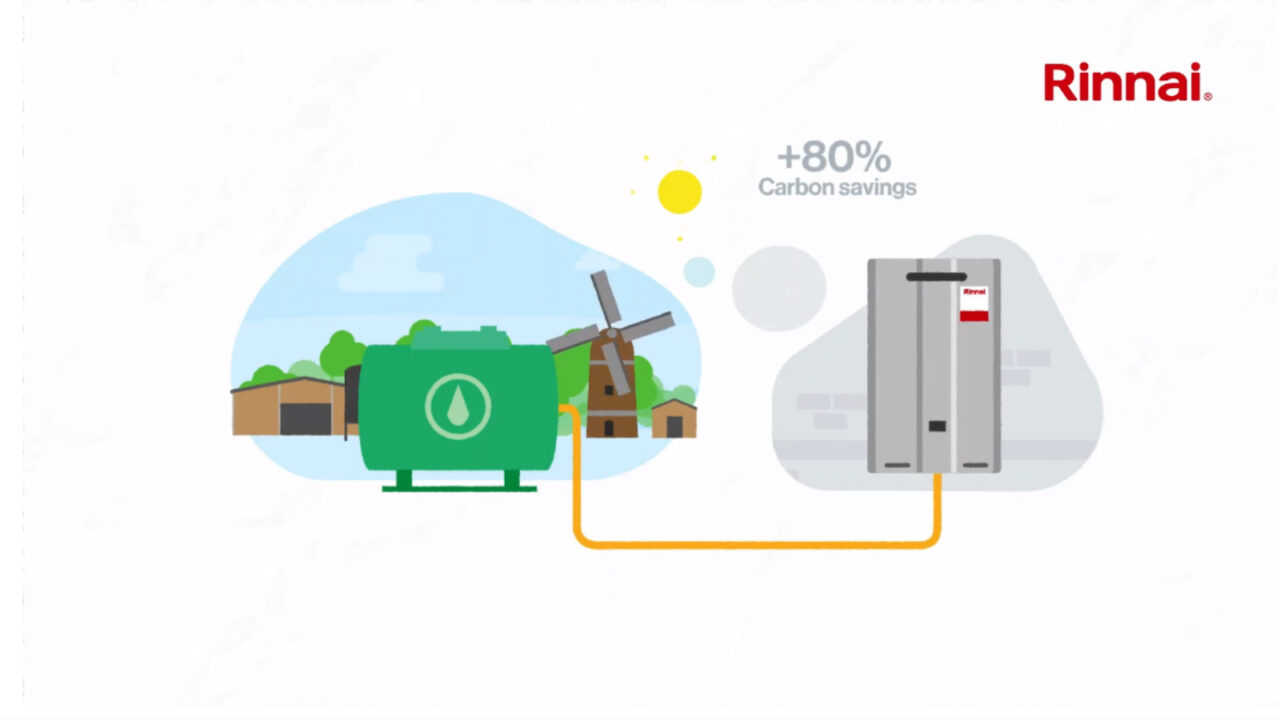
Current media focus is directed towards the issue of rising energy and living costs. Rinnai continuously works to produce robust and reliable products that benefit the customer in terms of finance and performance.
Rinnai’s instantaneous hot water systems have been rigorously analysed and found to offer significant savings in five key areas, when compared to traditional storage systems: running costs, initial payments, carbon footprint, space and weight.
Below features two graphs that visually demonstrate levels of emissions released by both a storage hot water system and a Rinnai N1600. The first graph reveals 1st year carbon footprint; the second establishes the difference after a period of 5 years.
The blue right-side column represents the total emissions released by a typical water storage system which is measured at nearly 19,000 kg of carbon dioxide. Rinnai’s N1600 is responsible for UNDER 15,000 kg of carbon dioxide.
Applications are now open for 2027 – get involved in HIP Learner of the Year & HIP Female Skills Competition today!
Giving and Taking Feedback Like a Pro: Learn how to give constructive feedback, take advice on board and build the skills to succeed in your career!
Get Involved. See What You Can Achieve: Discover how entering HIP competitions can boost your confidence, challenge yourself and help you realise your potential!

Carhartt women’s steel pants have been designed around how women actually move and work on site rather than simply resizing men’s.
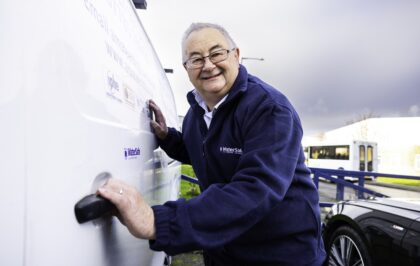
Registered Plumbers: 91% of UK homeowners believe installers should be qualified, vetted and on an official register.
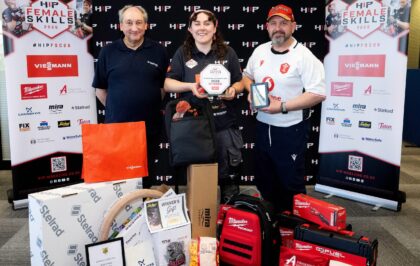
We are delighted to announce the winner of the HIP Female Skills 2026 – congratulations to Bronwen Evans from Cardiff and Vale College!